← Back to All Solutions

Solutions

Concept-Level System Performance

Model vehicle performance, fuel economy, and emissions using static, kinematic, and dynamic analysis, for any vehicle type or drive cycle.

SOLUTION OVERVIEW

Confident Conceptual Decisions

Early design decisions define the performance, efficiency, cost, and environmental impact of complex systems. Before detailed component designs are available, engineers need a fast and reliable way to evaluate system architectures, size key components, balance competing targets, and determine which concepts should move forward. 

GT-SUITE enables concept-level analysis using models and application-specific workflows matched to the information available and the decisions being made. Engineers can evaluate transportation systems, power and energy infrastructure, and other integrated applications using multiphysics component libraries, reusable analysis workflows, and built-in design exploration tools. This helps teams identify promising architectures, understand critical system interactions, and make informed decisions before committing to detailed development or physical hardware.

APPLICATION HIGHLIGHTS

Rapid Transportation Performance Analysis

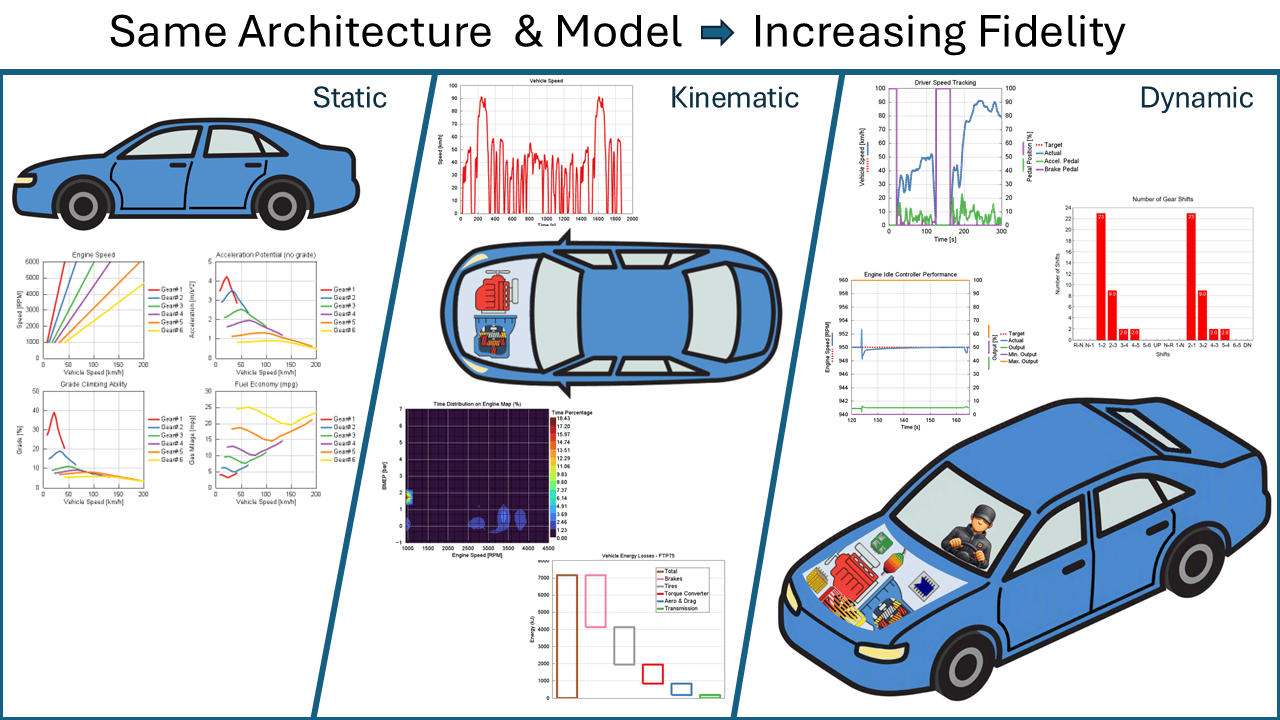
Transportation concepts can be evaluated using static, kinematic, or dynamic simulation based on the engineering question and available information. Static analysis rapidly estimates performance limits and key metrics such as acceleration, maximum speed, and gradeability. Kinematic analysis calculates the propulsion effort, energy consumption, fuel use, and emissions required to follow a prescribed speed or operating profile, while dynamic simulation captures transient system behavior and closed-loop controls. 

These approaches allow engineers to begin with high-level targets and simple component representations, then introduce additional physical detail as the design matures. The same integrated system architecture can support rapid performance studies, energy and emissions analysis, and dynamic evaluation across on and off-highway ground vehicles, rail systems, and marine vessels. 

APPLICATION HIGHLIGHTS

Optimize Hybrid Energy Management

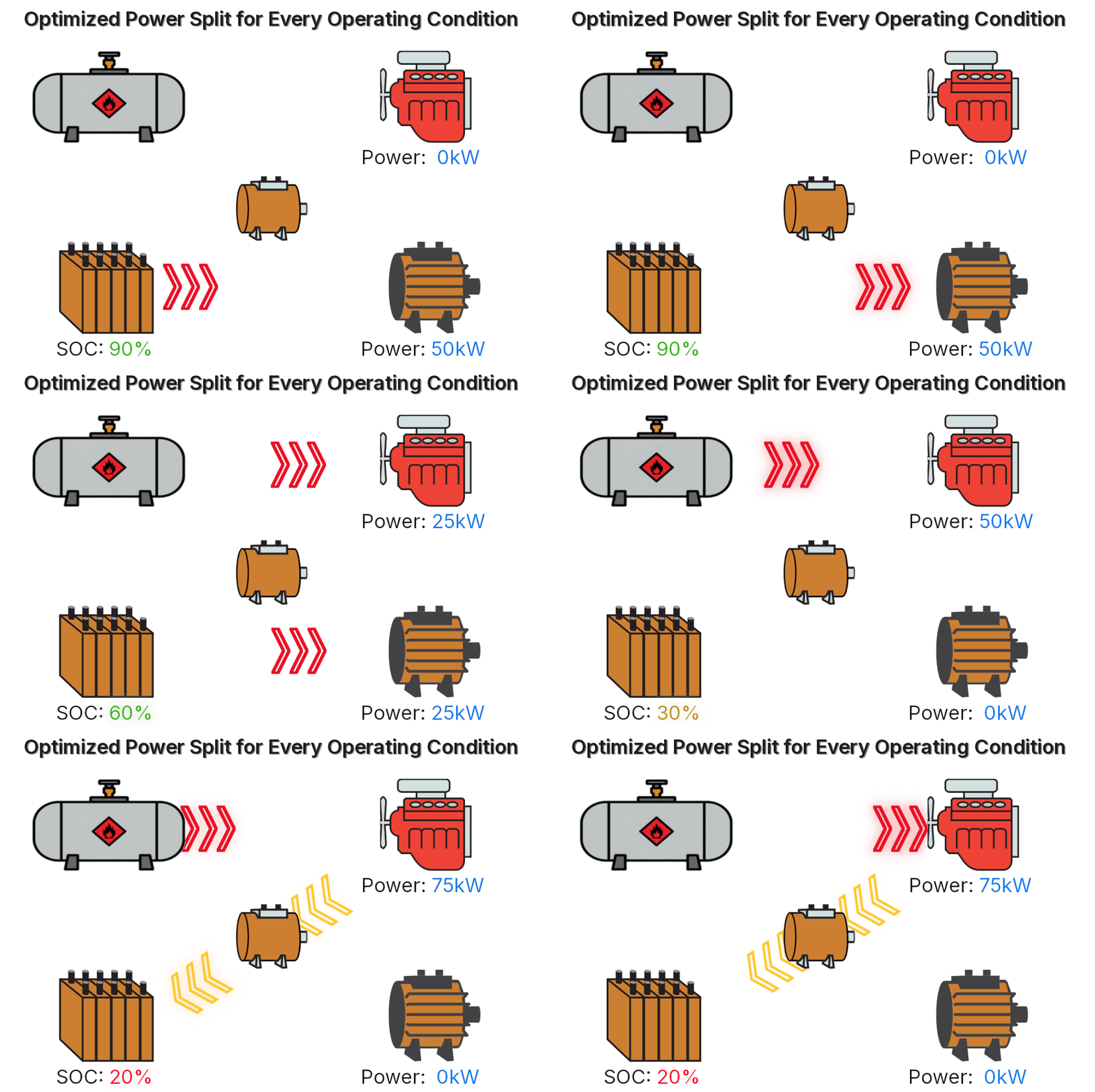
Hybrid and electrified transportation systems introduce a fundamental concept-design question: how should power be distributed among multiple power sources, energy storage devices, propulsion components, and auxiliary loads? Developing custom supervisory controls for every candidate architecture can require substantial effort before engineers know whether the underlying concept is viable. 

For supported kinematic vehicle and marine applications, GT-SUITE provides built-in Equivalent Consumption Minimization Strategy (ECMS) and dynamic programming methods to develop and evaluate energy-management strategies. The objective can be configured to minimize energy or fuel consumption, balance operating cost and emissions, or address other system-level goals. These capabilities help establish the performance potential of an architecture, compare competing concepts under optimized energy management, and provide a basis for developing implementable control strategies. 

APPLICATION HIGHLIGHTS

Explore Resilient Microgrid Architectures

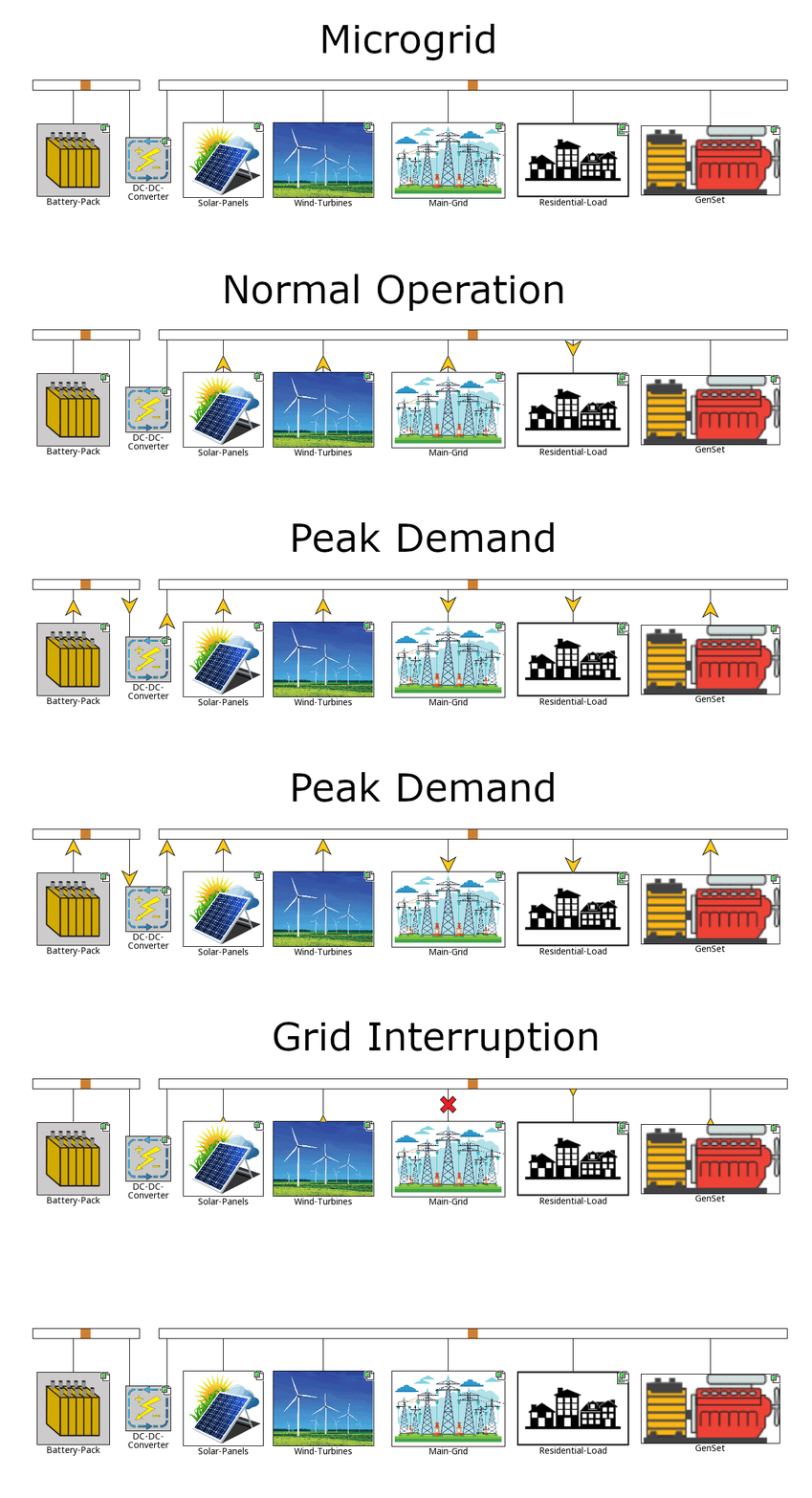
Microgrids combine grid connections, onsite generation, renewable energy, storage, backup power, electrical loads, and supervisory controls. During concept development, engineers must determine how these resources should be sized and operated to meet reliability, efficiency, emissions, and cost objectives under changing loads, weather, energy prices, and grid conditions. 

GT-SUITE integrates power generation, energy storage, renewable sources, fuel and hydrogen systems, thermal loads, and controls into a unified system model. Engineers can compare microgrid topologies, size major components, evaluate grid-connected and islanded operation, and explore power-flow and control strategies before equipment is purchased or deployed. Applications include data centers, industrial facilities, campuses, communities, and other sites that require efficient and resilient distributed power. 

APPLICATION HIGHLIGHTS

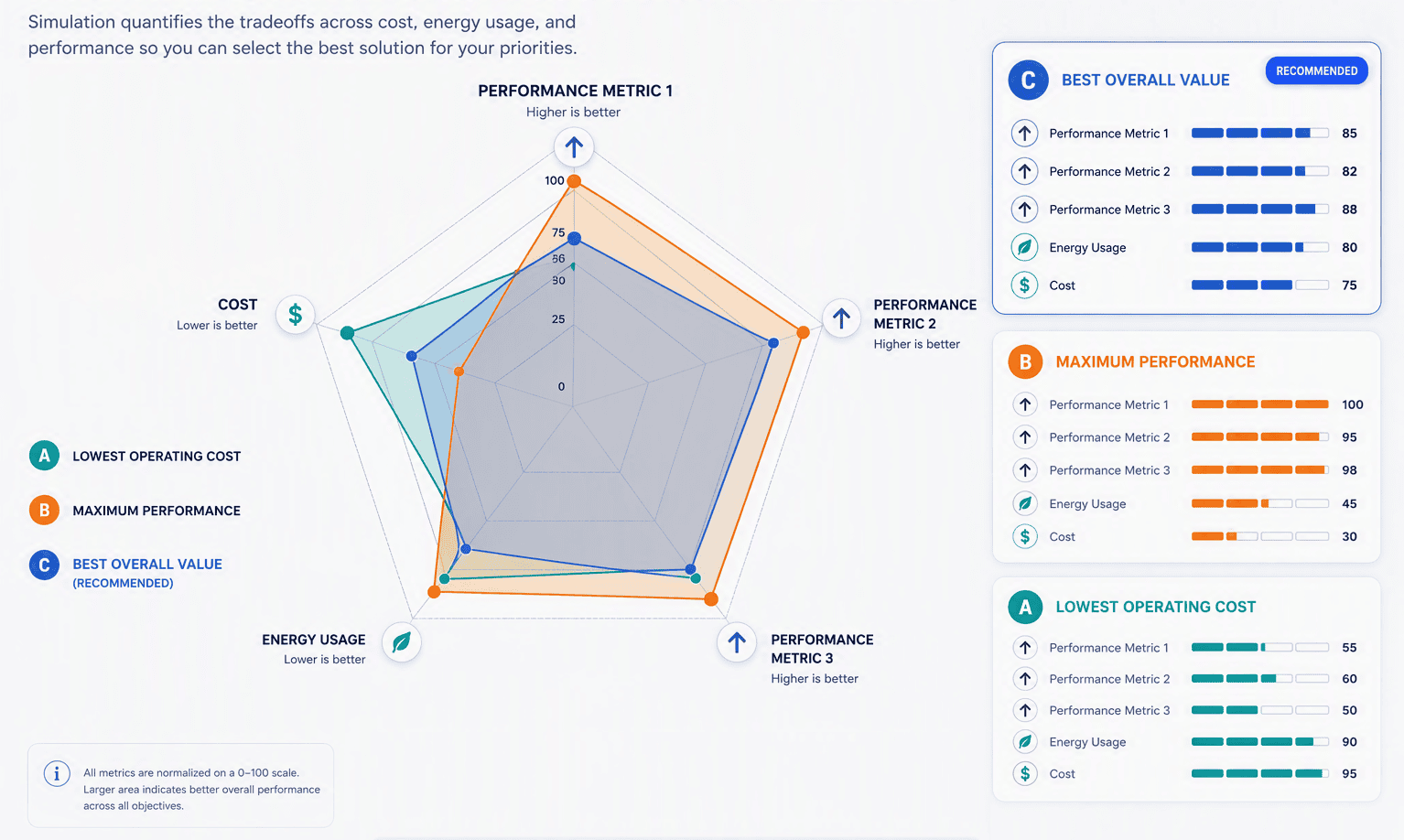
Compare Architectures Against System Targets

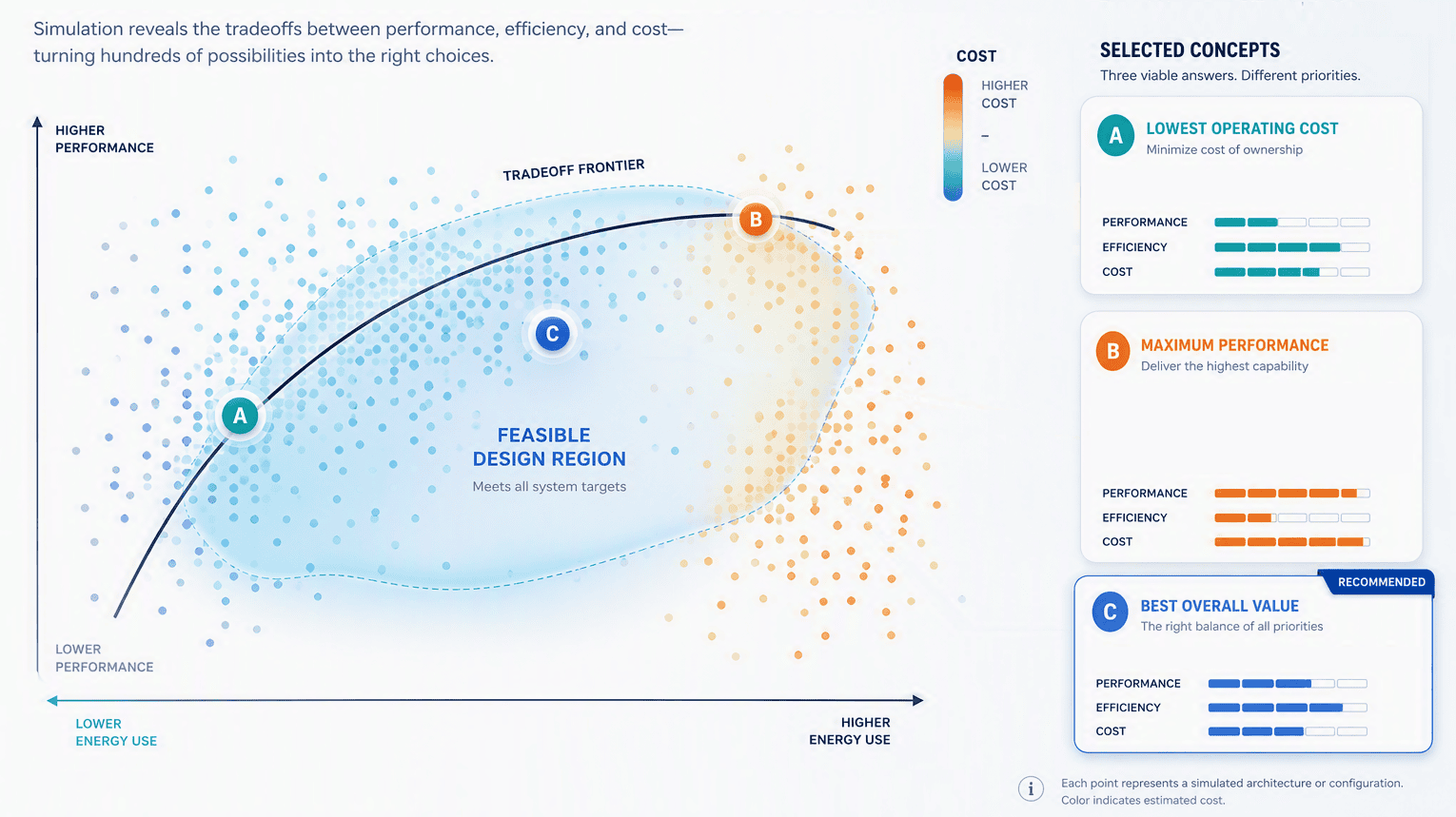
Concept development often begins with requirements rather than component specifications. Engineers may know the required performance, range, payload, energy use, reliability, emissions, or cost but still need to determine which system architecture and component sizes can meet those targets. 

GT-SUITE provides parametric modeling, design exploration, design of experiments, and optimization capabilities for evaluating potential configurations. By applying consistent operating profiles, constraints, and performance metrics, teams can identify feasible design regions, understand tradeoffs, and focus detailed engineering resources on the concepts with the greatest potential.

ADVANCED FEATURES

Key Features for This Solution

check mark icon

GT-CoDrive Concept Exploration

Create concept-level ground vehicle models from high-level targets, such as range and acceleration performance, and rapidly explore architectures and component combinations capable of meeting those targets through GT-Play web-based interface.

check mark icon

Reusable Analysis Workflows

Apply standardized operating profiles, duty cycles, analysis procedures, constraints, and result processing consistently across concepts and design alternatives.

check mark icon

Component Fidelity Switching

Swap components and fidelity levels as requirements evolve, at the click of a button without rebuilding the model.

check mark icon

Design Exploration and Optimization

Use built-in design of experiments and optimization methods to evaluate system tradeoffs, identify feasible design regions, and find configurations that best satisfy competing objectives.

check mark icon

IP-Protected Supplier Model Integration

Evaluate supplier components using protected, simulation-ready models that preserve system behavior while safeguarding proprietary model content.

check mark icon

Collaborative Model and Data Management

Organize reusable components, architectures, assumptions, and input data through libraries and projects, with Git-based version control, traceability, and team collaboration.

Learn More

Resources

Explore the resources below to learn more about this solution, including technical papers, case studies, and application notes.

Connect with an Expert

Looking for guidance on a systems simulation challenge or project? Fill out the form below and our team will reach out to discuss how we can help.