








Lambda Sensor Modeling
Detailed narrow and wide band oxygen sensor models for accurate air-fuel ratio feedback.
GT-xCHEM is an exhaust aftertreatment and chemical systems add-on for
GT-SUITE with extensive capabilities for emissions reduction and clean technology solutions
Product Overview
GT-xCHEM unifies the best-in-class capabilities of exothermia suite and GT-SUITE for exhaust aftertreatment and chemical systems solutions and delivers new capabilities essential for the development of regulatory compliant emissions systems. In addition, it supports expansion into chemical systems applications related to the mobility and stationary power industries such as fuel reformers for hydrogen fuel cells, CO2 capture and storage, and other chemical processing applications.
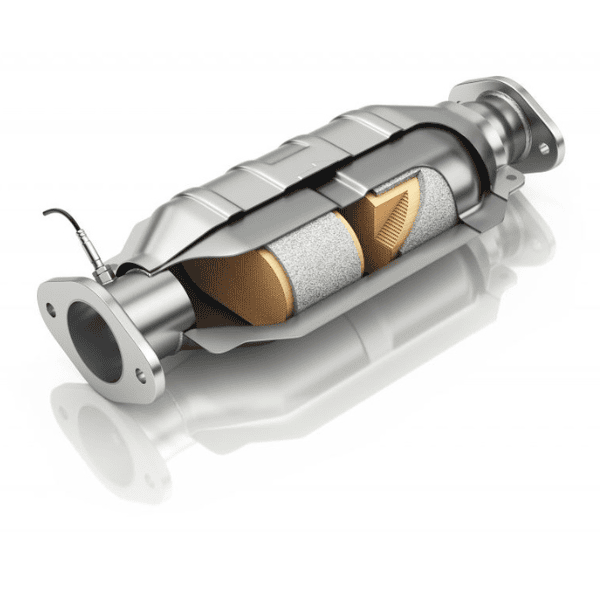
Exhaust Aftertreatment Modeling at its Core
GT-xCHEM builds upon a long tradition of exhaust aftertreatment modeling with GT-SUITE including the following highlights:
EVAP & Carbon Canister Modeling
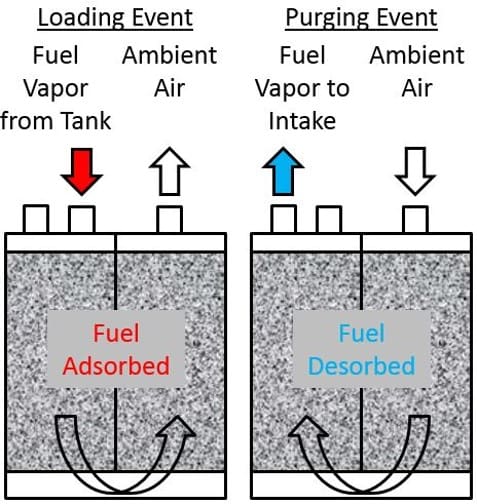
GT-xCHEM simulation software includes advanced solvers and components for modeling the entire Evaporative Emission Control System (EVAP), including the flow network, carbon canister, and canister purge valve (CPV). An activated carbon canister is used to capture hydrocarbon vapor emissions from the fuel tank as part of an EVAP system. The user has full control over defining the heterogeneous reaction mechanism for modeling the hydrocarbon adsorption and desorption in the carbon canister. There is increasing interest in optimizing the carbon canister size for hydrocarbon storage, and optimizing the CPV control strategy, especially for turbocharged gasoline direct injection (GDI) engines and hybrid electric vehicles (HEV/PHEV).
GT-xCHEM allows you to evaluate how a purge event affects engine performance and emissions. You can also choose when and where to purge during a drive cycle, for example, in an intake manifold under vacuum conditions or upstream of the compressor during boosted conditions. EVAP system components can be modeled in isolation or together with vehicle, engine, thermal management, and control systems, making this tool uniquely suitable for system level optimization and collaborative engineering.
Chemical Systems Modeling
The reactor modeling capabilities of GT-xCHEM are adaptable to accommodate research and development of new clean technologies:
Advanced Features
In addition to standard exhaust aftertreatment, evaporative emissions, and reformer modeling features, GT-xCHEM offers the following features:
Detailed narrow and wide band oxygen sensor models for accurate air-fuel ratio feedback.
Detailed sensor model for predicting NOx concentration and emissions feedback.
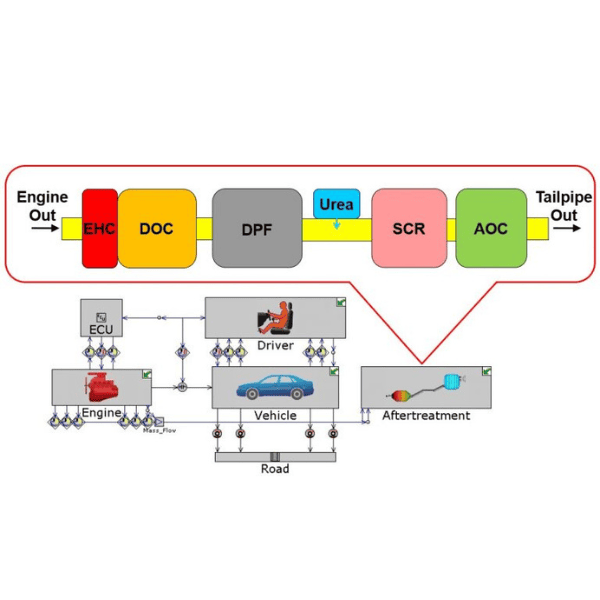
EHC model with peripheral electrodes for fast catalyst light-off simulation.
Models droplet evaporation and impingement for urea injection and fuel dosing.
Structured mesh with symmetry option to cut computation time.
Reduced-order models for faster simulation of complex chemical and aftertreatment systems while maintaining engineering accuracy.