









Category: hev

Lithium Plating Detection: How Virtual Sensors Enable Smarter Fast Charging
Fast Charging Pushes Li-ion Batteries Toward a Hidden Risk Fast charging has become a defining requirement for modern electric vehicles and battery-powered systems. Users expect shorter charging times, consistent performance, and reliable operation under all conditions. For simulation, battery control, and engineering teams, this shift raises a shared challenge: predicting and managing internal battery risk […]

When Agents Build the Model: Accelerating Digital Twins with GT Intelligence Studio
Why Building a Digital Twin Model Still Takes Too Long Our three-part series on physics-based digital twins followed a solar-charged, battery-powered Internet of Things (IoT) monitoring device. We covered the availability and battery-health questions that matter for operating it, how GT-SUITE and GT-AutoLion capture its physics and aging behavior, and how the model runs in […]

Hybrid Powertrain Simulation for a Pickup Truck: How FEV Optimized Five Architectures with GT-SUITE
Most hybrid powertrain programmes commit to an architecture too early. A configuration that looks promising on paper can fall apart once you account for towing loads, payload constraints, and real-world drive cycles simultaneously. By that point, hardware has been ordered and timelines are fixed. FEV North America took a different approach. Working with a 4WD […]

Virtual Validation of Lithium-Ion Battery Management Systems
Battery Management Systems (BMSs) play a critical role in ensuring lithium-ion battery packs operate safely, efficiently, and reliably across all operating conditions. As battery systems become more complex and application demands continue to increase, validating BMS algorithms has become significantly more challenging. Building on the previous blog’s overview of BMS architecture for lithium-ion batteries (LIBs), […]

What is a Battery Management System (BMS)? The Brain Behind Lithium-Ion Batteries
The Human Analogy: How BMS Brings Batteries to Life Imagine walking into your favorite bakery. Your eyes scan the variety of treats in the glassed casing. Your ears pick up the humming and whirring of the ovens. Your skin senses the warmth in the room. Your nose picks up the smells of freshly baked bread […]

Everything You Wanted to Know About Sodium-Ion Batteries
From Lithium-Ion to Sodium-Ion Batteries: A New Era in Battery Technology As the demand for energy storage continues to rise, sodium-ion batteries (NIBs) are gaining momentum as a compelling alternative to lithium-ion batteries (LIBs). Leveraging more abundant and cost-effective materials, NIBs are especially well-suited for low-speed electric vehicles—where range is less critical and affordability is […]
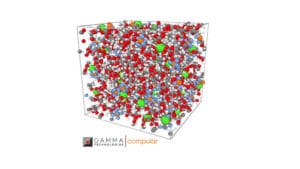
How Multi-scale Models Are Enhancing Battery Performance and Design
Beyond Experimentation: Predicting Battery Performance with Multi-Scale Models In today’s electrified world, designing better batteries goes far beyond trial-and-error testing. Engineers and researchers are increasingly turning to simulation to accelerate innovation and reduce development costs. Lithium-ion batteries power modern energy storage systems, from electric vehicles to grid storage. As demand grows for higher performance, longer […]

Using Toshiba’s Battery Electrochemical Models to Make System-level Decisions Faster
Eliminate the Guess Work in Battery Modeling Selections System-level design engineers have a difficult task. They deal with challenging questions such as: What Lithium-ion cells work best for a particular application; How many cells should be placed in series and parallel; or What type of motor and drive technology should be used? They have to […]