








Category: machine learning

Lithium Plating Detection: How Virtual Sensors Enable Smarter Fast Charging
Fast Charging Pushes Li-ion Batteries Toward a Hidden Risk Fast charging has become a defining requirement for modern electric vehicles and battery-powered systems. Users expect shorter charging times, consistent performance, and reliable operation under all conditions. For simulation, battery control, and engineering teams, this shift raises a shared challenge: predicting and managing internal battery risk […]

When Agents Build the Model: Accelerating Digital Twins with GT Intelligence Studio
Why Building a Digital Twin Model Still Takes Too Long Our three-part series on physics-based digital twins followed a solar-charged, battery-powered Internet of Things (IoT) monitoring device. We covered the availability and battery-health questions that matter for operating it, how GT-SUITE and GT-AutoLion capture its physics and aging behavior, and how the model runs in […]

Hybrid Powertrain Simulation for a Pickup Truck: How FEV Optimized Five Architectures with GT-SUITE
Most hybrid powertrain programmes commit to an architecture too early. A configuration that looks promising on paper can fall apart once you account for towing loads, payload constraints, and real-world drive cycles simultaneously. By that point, hardware has been ordered and timelines are fixed. FEV North America took a different approach. Working with a 4WD […]
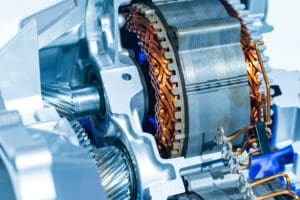
Machine Learning-Based E-Motor Thermal Metamodeling: Replacing FE Models for Fast System-Level EV Simulation
The Challenge with E-Motor Thermal Simulation Thermal simulation of electric motors sits at the intersection of two competing demands: the need for spatial accuracy at the component level, and the speed required for system-level scenario exploration. High‑fidelity 3D Finite Element (FE) thermal models of electric machines are essential for predicting hotspot temperatures, validating cooling strategies, […]

Virtual Validation of Lithium-Ion Battery Management Systems
Battery Management Systems (BMSs) play a critical role in ensuring lithium-ion battery packs operate safely, efficiently, and reliably across all operating conditions. As battery systems become more complex and application demands continue to increase, validating BMS algorithms has become significantly more challenging. Building on the previous blog’s overview of BMS architecture for lithium-ion batteries (LIBs), […]

Part 3 — Integrating Physics‑Based Digital Twins into an IoT and Cloud Environments
Part 1 introduced the operational challenges associated with battery-powered IoT monitoring devices. Part 2 described how GT‑SUITE and GT‑AutoLion models capture the system physics and battery aging mechanisms. This final part explains how these models integrate into an IoT and cloud architecture, allowing each digital twin to operate as an automated, scalable component of the […]

Part 2 — Modeling Physical Digital Twins: Battery Behavior and Aging with GT‑SUITE and GT‑AutoLion
In Part 1, we explored why solar-charged, battery-powered IoT monitoring devices require reliable prediction of availability, SOH, and RUL, and why telemetry, statistical methods, or machine learning alone are not sufficient. In this second part, we focus on the modeling foundation: how GT‑SUITE and GT‑AutoLion provide the physics‑based structure that allows each digital twin to […]

Part 1 — Exploring the Power of Physics-Based Digital Twins
From asset monitoring stations in remote locations to industrial sensors tracking equipment health, many modern systems rely on small, self-powered IoT devices operating far from human reach. These devices are typically equipped with a solar panel, a battery, and a communication module. Their job is simple: collect data, stay powered, and reliably transmit information to […]